Students in my lab is involved in two distinct research projects:
Community level analysis of nitrate metabolism in freshwater wetlands and
The ecological, biochemical and structural analysis of NDGA in Larrea tridentata
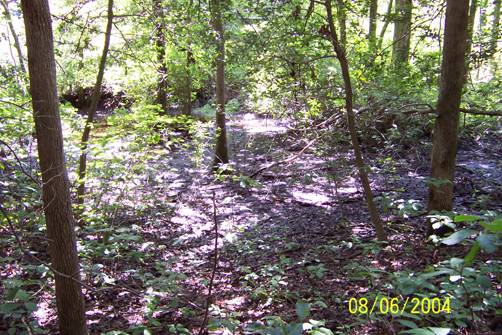

Wetlands Deserts
Community level analysis of nitrate metabolism in freshwater wetlands
Wetlands are critical ecosystems for not only many plants and animals, but also for humans. In these soggy pieces of land, many of the chemicals we introduce into the environment are transformed into less toxic substances. Perhaps the most important biochemical process occurring in wetlands is denitrification.
Runoff from fields, lawns and
even road surfaces
transports an excess of nitrogen into nearby streams.
This nitrogen isn't the inert nitrogen gas found in our atmosphere, but rather
nitrogen in the forms of nitrate, NO31-, nitrite, NO21-,
and ammonium, NH41+, that are found most often (but not
exclusively) in fertilizers. Just as these substances can turn your yard a
lovely green, so too can they feed algae in various bodies of water. Algae
blooms block sunlight to water plants growing beneath the water's surface. When
the algae die, the decay process consumes oxygen, producing a condition known as
hypoxia, which means the water has too little oxygen for organisms such as fish
and crabs. However, the microorganisms in
wetlands surrounding our waterways can convert these excess nutrients into
gasses that escape into the atmosphere.
Hence, by preserving wetlands, we can reduce our impact on our waterways. Currently both the
Click here to go to NOAA’s website on the Gulf of Mexico’s
hypoxic zone
Click here to go to the Chesapeake
Bay Foundation’s fact sheet.
Some of the biochemical reactions taking place in wetland
soils are:
Ammonia oxidation: 2NH41+ + 3O2
→ 2NO21- + 2H2O + 4H1+
Nitrite oxidation: 2NO21- + O2 → 2NO31-
Denitrification: NO31- + 2H1+ + 2e1- → NO21- + H2O
NO21- + 2H1+ + 1 e1- → NO + H2O
2 NO +2H1+ + 2e1- → N2O + H2O
N2O + 2H1+ + 2e1- → N2 + H2O
There are two forms of the denitrification pathway: dissmilatory and assimilatory. Dissmilatory denitrification uses nitrate as an alternative to oxygen for the electron acceptor in the energy producing electron transport system. Assimilatory denitrification uses the denitrification pathway with an alternative set of enzymes to reduce nitrate to ammonia for the bacteria's biosynthetic pathways. This process reverses the ammonia oxidation reaction and thus requires some energy input. Dissmililatory denitrification produces the gasses NO, N2O (a greenhouse gas), and N2 whereas the assimilatory process does not produce gasses as a by-product.
Research Goals:
1. To study the effect of seasonal temperature change on the overall rate of denitrification which may be useful in nitrogen management plans for farmers and lawn service providers.
2. To find one or more microbial genetic markers in soil samples that can be detected through simple, inexpensive soil tests so that developers can determine how close to a wetland site they may build without actually disturbing the wetland. It is my hope that with the means to accurately determine where the functional edge of a wetland is, both environment preservation and economic development can coexist.
Research Approach:
Goal 1: Denitrification as a biochemical process can be followed in a number of ways. For this project, we are using an ion selective nitrate probe to follow the reduction of nitrate by samples of wetland sediments obtained at different times of the year. In addition, since the overall process of dissimilatory denitrification produces the gasses NO, N2O and N2, we can follow gas production via a sensitive pressure probe and gas chromatography. With these two measures, we should be able to determine the metabolic participation of the dissimilatory pathway vs the assimilatory pathway.
Goal 2:
Microbial DNA
can be used to analyze, and even identify, specific members of the microbial soil
community. Microbial genomic DNA can be
extracted from soil samples then subjected to PCR (polymerase chain reaction). By designing different PCR primers, the whole
community can be analyzed or a subset of the community can be analyzed. Since I'm most interested in the
dentrification process, PCR primers that amplify parts of the narG
(dissimilatory nitrate reductase, subunit G), nap A (a second dissmilatory
nitrate reductase, subunit A) and nirK
(assimilatory nitrate reductase, subunit K) genes can be used to create a community profile that focuses on
denitrification. When cloned and
sequenced, these PCR products can be used to identify the bacteria
involved.
The ecological, biochemical and structural analysis of nordihydroguaretic acid (NDGA)
in collaboration with Dr. Kimberly Hunter (Biology)
NDGA is a secondary metabolite found in high concentrations in the leaves of Larrea tridentata, the creosote bush of the Southwestern deserts. Classified as a lignan, the function of NDGA is unknown; however, it has been shown to have many medically important chemical properties such as having antibacterial and antiviral properties as well as being an antioxidant.

The chemical structure of NDGA
NDGA is not soluble in water. Thus it is likely to be dissolved in or interacting with cellular membranes. Supporting this idea, work by others has shown that NDGA affects membrane transport between the smooth endoplasmic reticulum and the golgi. In addition to membranes, NDGA has been shown to interact with other proteins (collagen, microtubulin, actin and lipoxygenase) and has been shown to act as an anti-viral, anti-inflammitory and anti-fungal agent.
Goals of research:
1. To understand the structure of NDGA and how that influences NDGA's chemical interactions with proteins, membranes and other small molecules.
2. To quantify the amount of NDGA present in leaves under various environmental conditions in the hopes of elucidating the biochemical functions of NDGA and the ecological influences on NDGA biosynthesis in the Larrea bush.
Research approach:
Goal 1: We are using HPLC, UV-Vis, NMR and fluoresence to analzye the structure and interactions of NDGA.
Goal 2: NDGA is being extracted from the leaves of plants grown in a controlled greenhouse environment as well as in the wild. The NDGA is then quantified using a rapid HPLC protocol.
Page updated: July 13, 2012
Return to Dr. Miller’s homepage.