Dr. Miller’s Research Interests
Wetlands are critical
ecosystems for not only many plants and animals, but also for humans. In these sometimes tiny, soggy pieces of land
many of the fertilizers, pesticides, herbicides and other chemicals we introduce
into the environment get transformed into less toxic substances.
Wetlands come in many shapes
and sizes. Here on the
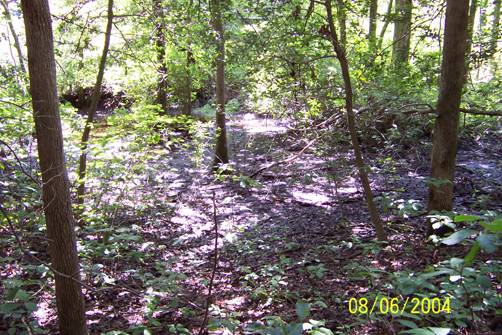
My local wetland study site is in a
conservation area near


Montandon marsh is a protected wetland in
central
Perhaps the most important
biochemical process occurring in wetlands is denitrification. Runoff from fields, pastures, and lawns
transport an excess of ammonia, nitrate and nitrite into our lakes, rivers and
bays. However, the microorganisms in
wetlands surrounding our waterways can convert these excess nutrients into
gasses that escape into the atmosphere.
Hence, by preserving wetlands, we can reduce our impact on our waterways. If we continue to destroy wetlands, our
lakes, bays and even oceans may end up as deserts. Currently both the
Some of the biochemical reactions taking place in wetland
soils are:
2NH41+ (aq) + 3O2
(aq) → 2NO21- (aq) + 2H2O (l) + 4H1+
(aq)
2NO21- (aq) + O2
(aq) → 2NO31- (aq)
C6H12O6 (aq) +
4NO31- (aq) → 6H2O (l) + 6CO2
(aq) + 2N2 (g)
Click here to go to NOAA’s website on the Gulf of Mexico’s
hypoxic zone
Click here to go to the Chesapeake
Bay Foundation’s fact sheet.
Click here to go to the EPA’s website on hypoxia in these and other areas
of the
The goal of my research is to
find microbial markers in soil samples that can be detected through simple,
inexpensive soil test so that developers can determine how close to a wetland
site they may build without actually disturbing the wetland. It is my hope that with the means to
accurately determine where the functional edge of a wetland is, both the
environment preservation and economic development can coexist.
Research approach for
Once every week for an entire
year, this swamp will be sampled at four sites.
Wooden pegs were driven into the ground to mark the sample sites so that
each weekly sampling occurs at the same spots.
These four sites (see image below) are located in a forested upland
position (peg 1), slightly upland from apparent normal water level (peg 2),
slightly below the normal water level (peg 3) and in the center of the wetland
(peg 4).

Schematic of
After collection, each sample
is subdivided into three parts, one for determining moisture content and
organic content, one for microbial community analysis based on extractable
lipid profiles and one for microbial community analysis based on microbial
DNA.
The moisture content is
determined by weighing out a wet soil sample then drying over night in an oven
at 105°C. The mass lost is due to water. These dried samples are then placed into a
muffle furnace and heated to ~450°C, hot enough to burn off most organic molecules. The mass lost is mostly due to the loss of
organics. However, some lost mass is
also likely due to the conversion of carbonates to oxides and carbon
dioxide.


Soil samples before carbon
analysis (upper picture) and after ashing in a muffle furnace (lower picture).
Lipids are extracted from
each sample using a Bligh-Dyer extraction buffer (containing 1:2:0.8 v/v/v
chloroform:methanol:water). The phases
are split using a mild salt solution and the organic phase concentrated. The ester-linked fatty acyl chains containing
in this mixture are transmethylated using sodium methoxide and extracted using
a hexane/chloroform solvent. Those
lipids entering the hexane phase are then analyzed using a gas
chromatograph/mass spectrometer to create a lipid profile of the soil microbial
community. Comparison of these profiles
using a simple Jaccard similarity index allows a quantitative comparison of the
microbial community structure across time.

Two soil samples during
extraction with the Bligh-Dyer solvent.

Soil lipid extracts before
phase separation.
In addition to using
microbial lipids as a biochemical marker for community structure, microbial DNA
can be used to analyze, and even identify, members of the microbial soil
community. Microbial genomic DNA can be extracted
from soil samples then subjected to PCR (polymerase chain reaction which copies
small sections of DNA so that you have enough to analyze and clone). By designing different PCR primers, the whole
community can be analyzed or a subset of the community can be analyzed. Since I'm most interested in the
dentrification process, PCR primers that amplify parts of the narG and nirK
genes can be used to create a community profile that focuses on
denitrification. When cloned and
sequenced, these PCR products can be used to identify the bacteria
involved.

A DNA agarose gel of the
narg soil community DNA fingerprint of four soil samples (lanes 1-4) and of the
narg PCR products that were fingerprinted (lanes 6--9). Lane 5 is a DNA sizing standard.
Return to Dr. Miller’s homepage.